Under the promise of innovation, algorithmic systems deepen familiar forms of domination and exploitation of labor.
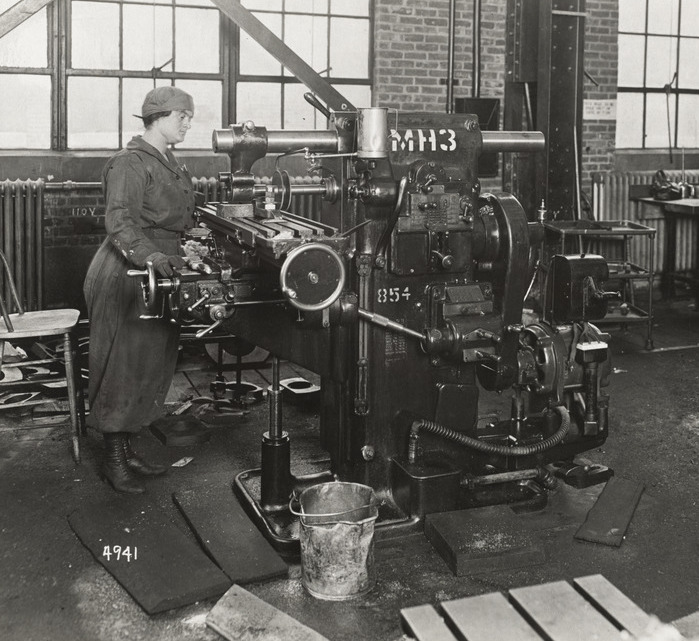
Artificial intelligence does not usher in a new historical stage of capitalism. It updates, in digital form, the function that Marx attributed to machines: reorganizing work to increase value extraction. If industrial machinery disciplined manual labor, AI commands cognitive labor. This is not a rupture, but historical continuity. Algorithmic automation expands the subsumption of labor to capital, mediated by data, platforms, and prediction systems.
The rise of artificial intelligence can be interpreted as a continuation of the functions described by Marx for machines. Just as industrial machines transformed manual labor, AI impacts immaterial and cognitive labor in capitalism. Matteo Pasquinelli reflects on the historical impact of technology:
“The Machinery Question was first and foremost a reaction of the working class and an expression of its demand for control and ownership of technological progress.” (PASQUINELLI, 2023, p. 80).
AI automates processes and captures data to transform human activities into sources of economic value. Tiziana Terranova (2020) points out that digital work, mediated by technological platforms, intensifies exploitation while disguising its most visible forms. This reorganization of work reflects the logic described by Marx:
“Once adopted into the production process of capital, the means of labor passes through different metamorphoses, whose culmination is the machine, or rather, an automatic system of machinery… This system produces surplus-value.” (MARX, 2011, p. 692).
In this scenario, AI reflects and amplifies the same processes of exploitation described by Marx in a digital guise, creating unprecedented challenges for labor in informational capitalism.
In the current phase of capitalism, what Marx described as the subsumption of living labor under capital finds its update in the systems of algorithmic extraction operated by digital platforms. Fixed capital is also present as computational infrastructure and networked information, mobilized not only to mediate labor in the physical environment, but also to capture subjectivities, attention, emotions, data, and behaviors. Therefore, the new machine continues to be a vector for the organization of life, reaffirming the function of technology as an instrument of control over labor and time.
This dynamic refers to Marx’s formulation (2011, p. 692), according to which large-scale industry establishes “an automatic system set in motion by an automaton, a driving force that moves by itself, consisting of numerous mechanical and intellectual organs, in such a way that the worker is relegated to the function of simple surveillance and command.” It is not just about the automation of production, but the automation of mediation: algorithms filter, rank, and distribute flows of information and value.
We live under a regime of data extractivism, in which personal information, affections, and social interactions are mined as raw resources for the accumulation of capital. This operation reorganizes practices in the form of algorithmic capitalization. That is, a logic in which access to essential services depends on submission to opaque systems of surveillance, ranking, and prediction (MOROZOV, 2018, p. 177–178).
This configuration does not express a “post-capitalism,” but rather an internal mutation of capitalism itself, which internalizes mechanisms of domination in technically sophisticated and socially naturalized environments. This emerging system is characterized by large technology companies. Not participating implies exclusion—a form of invisible and effective coercion. In this context, Big Tech companies do not just offer services; they have become the infrastructure on which ways of life are reorganized. This new technical regime shapes the privatized digital welfare state: an algorithmic architecture that partially replaces state functions, such as education, health, and security, with commercial mediations based on data capture (Morozov, 2018).
The new algorithmic machinery, far from being merely a technical apparatus, constitutes an infrastructure of subjectivation. It organizes and monetizes behaviors, modulating decisions based on capitalist logics of accumulation.
In this sense, society’s productive force is also composed of the capacity of technical systems to capture and organize time, the body, and attention—that is, by the degree of integration of fixed capital into everyday life. It is a technosocial regime in which algorithmic mediation becomes a structuring condition of existence, reaffirming the centrality of machinery as the historical operator of capital. In informational capitalism, machines have evolved into more sophisticated forms, but the principles described by Marx remain applicable. AI, like industrial machines, amplifies productivity and reorganizes work. However, its main contribution is the control and extraction of value through the capture and processing of data.
Like the machines described by Marx, AI does not directly generate new value. It only intensifies the exploitation of human labor by expanding production and management capabilities. In informational capitalism, the worker is often made invisible, while technology is promoted as the primary source of innovation and value. This narrative obscures the central role of human labor and perpetuates the dynamics of exploitation and alienation.
Marx’s analyses of machines, labor, and value production provide a robust theoretical framework for understanding the contemporary dynamics of informational capitalism and the impact of AI. Although modern technologies present new configurations, the underlying principles of exploitation, alienation, and value transfer remain unchanged.
Artificial intelligence does not create value. Like the machinery analyzed by Marx, it only intensifies the exploitation of human labor by expanding capacities for control, management, and extraction. In informational capitalism, labor is hidden under the narrative of technological innovation, while data, attention, and behavior are converted into sources of accumulation. Marxian categories remain valid because the logic remains the same: technology does not emancipate on its own. It operates as a historical instrument of command, reorganizing work and life according to the demands of capital.
References:
- MARX, Karl. Grundrisse: manuscritos econômicos de 1857-1858. São Paulo: Boitempo, 2011
- MOROZOV, E. Big Tech: a ascensão dos dados e a morte da política. São Paulo: Ubu, 2018
- PASQUINELLI, Matteo. The Eye of the Master: A Social History of Artificial Intelligence. London; New York: Verso, 2023.
- TERRANOVA, Tiziana. Free Labor: Producing Culture for the Digital Economy. Social Text, v. 18, n. 2, p. 33-58, Summer 2000.