Brazil’s external positioning in recent years can be interpreted as both as a bid to build a new global hegemony and as a strategy for acting amid the decline of multilateralism. In other words, it is not a question of defending the international order as it was, but of disputing its direction as it loses cohesion, legitimacy and coordination capacity. In general, the current Brazilian government seems to be acting to preserve arenas of coordination – which, although imperfect, are mechanisms for global coordination of efforts towards common goals – while attempting to shift the axis of power and representation in favour of the Global South.
This reading is in line with a relevant argument about the crisis of international governance: the weakening of multilateral mechanisms is not the cause of the crisis, but a symptom of a deeper dispute over power, interests and legitimacy. This situation has been particularly strained by the stance of the US – especially in the more openly anti-multilateral inflections of Trumpism – combining rhetoric that delegitimises institutions with a preference for aggressive unilateral measures (especially commercial ones). It is precisely in this type of context that Brazil seems to be moving.
This diagnosis helps to interpret Brazil’s position on two seemingly distinct but politically convergent fronts: regional leadership in Mercosur and the centrality attributed to BRICS. In both cases, the country acts as an agent that seeks to preserve multilateral spaces, even if they are fragile, and simultaneously reform them from within. In the government’s official narrative, this is explicit: foreign policy is presented as a return to protagonism via multilateral forums, with BRICS as one of the main central axes and Mercosur as an instrument of regional integration and international insertion. The government highlights Brazil’s presidency of BRICS in 2025 under the slogan of ‘more inclusive and sustainable’ governance, in addition to the pro tempore presidency of MERCOSUR in the second half of 2025, with a focus on regional cohesion, the common market, and strategic agendas1.
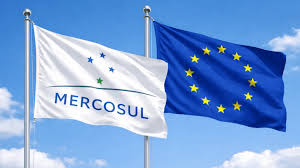
This dynamics gains momentum when we look at the concrete board. In the case of MERCOSUR, in December 2024, Itamaraty recorded the definitive conclusion of negotiations for the MERCOSUR-European Union agreement (with all chapters completed), and in 2026 it advanced in the discussion of its implementation, albeit amid political resistance within the EU (The Mercosur and European Union Agreement: Impasse and Promises of Economic Growth for the Region). Europe’s own urgency in accelerating this agreement was associated with the environment of tariffs and trade tensions with the US. Despite the various problems with the agreement, the Brazilian government’s active position in its drafting is not only related to its national economic strategy – through the diversification of its trade partnerships or the modernisation of its industrial park via integration into the European bloc’s production chains – but also to the formation of one of the largest bilateral free trade agreements in the world amid a fragmented international system.
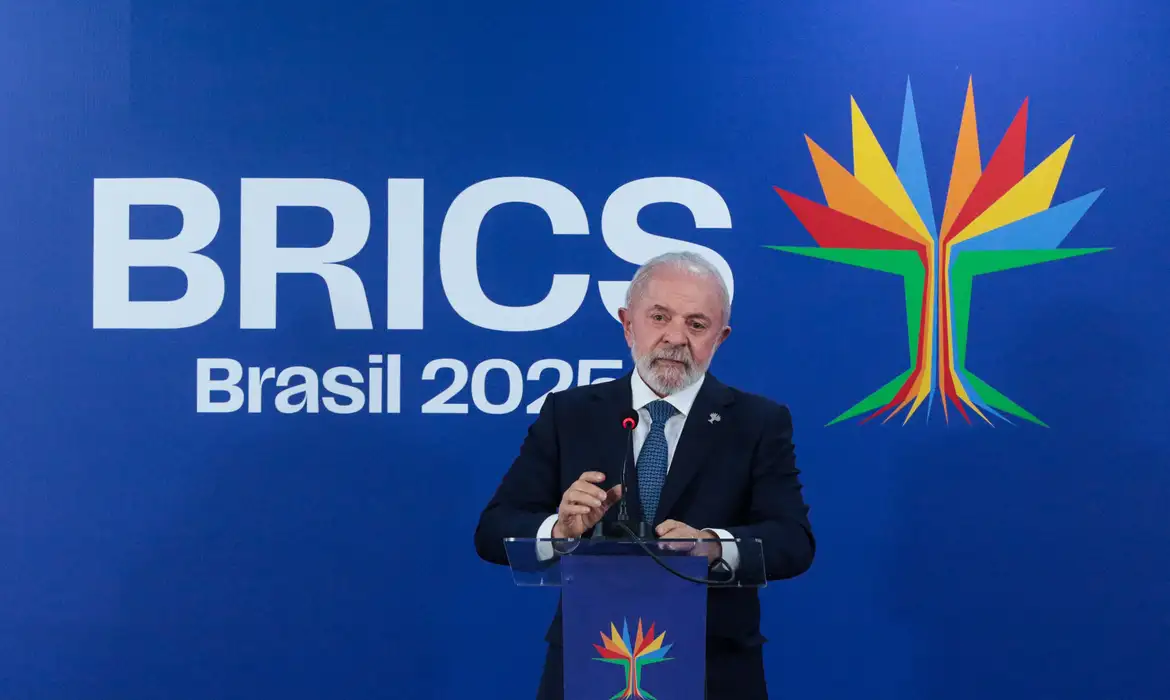
In the BRICS axis, the movement is similar, but perhaps with an even more explicit emphasis on reforming the international order, combining global governance reform and the gradual construction of parallel instruments that enable a fairer integration of countries in the Global South into the international economy. Brazil’s presidency of the bloc in 2025 was formulated under the banner of ‘more inclusive and sustainable’ governance, with an emphasis on reforming multilateral institutions and strengthening the voice of developing countries.
The debates surrounding the New Development Bank (NDB) – the BRICS bank – help to qualify the argument. The NDB can be understood as an expression of a typical strategy of creating alternative institutions without completely abandoning existing ones. The literature on the bank shows that it expands the international financial architecture, strengthens coordination between BRICS countries, and opens the door to instruments such as local currency financing – which can reduce structural dependencies – but without representing a complete break with the current financial order (see Godinho and Mattos, 2025)2. In political terms, this means that BRICS operates less as an immediate substitute for the system and more as organised pressure for rebalancing within it – a dynamic that is also expressed by signs of attempts to de-dollarise the bank’s assets and operations.
This is where the issue of the United States under the Trump administration comes in. The problem is not only the anti-multilateral and aggressively nationalist rhetoric – leaving aside all the other xenophobic, racist and denialist atrocities that the administration reproduces – but its institutional translation: order to withdraw from the Paris Agreement, exit from the WHO, suspension of related negotiations and, more recently, announcement of withdrawal from dozens of international entities and the UN, in addition to memoranda and tariff measures. If this pattern of political isolation persists, the potential loss for the US is not only commercial, but also in terms of hegemonic capacity. Hegemony is not just material power; it is also the ability to define legitimate norms, agendas, and procedures. By withdrawing from multilateral arenas, Washington may preserve instruments of bilateral coercion in the short term, but it tends to lose presence precisely in the spaces where hegemony is formed, as other actors begin to dispute it while other actors begin to dispute new spaces of hegemony. This is a less visible erosion than a military or economic defeat, but potentially decisive.
In this scenario, Brazil’s position gains prominence due its articulation of Mercosur, BRICS and other cooperation fronts, expanding its room for manoeuvre in a fragmented world – without abandoning these fragments of multilateralism, but proposing their restructuring precisely from within its rifts.
- Secretaria de Comunicação Social (2026). Em três anos, Brasil consolida nova fase da política externa e amplia influência global. https://www.gov.br/secom/pt-br/acompanhe-a-secom/noticias/2025/12/em-tres-anos-brasil-consolida-nova-fase-da-politica-externa-e-amplia-influencia-global ↩︎
- Godinho, E., Mattos, B. S. (2025). The New Development Bank and the Ecological Transition: Decoupling Development Finance from Core Currency Hegemony? Institute for International Political Economy Berlin, Working Paper 260/2025. https://www.ipe-berlin.org/fileadmin/institut-ipe/Dokumente/Working_Papers/Working_Paper_260_2025.pdf ↩︎