In the column “What to Do When They Vote Against Your Right to Vote,” I described a cold morning in Vienna, a train bound for Budapest, and a lecture that dismantled some of the most comfortable certainties we tend to hold about democracy, the electorate, and education. There, in light of the evidence presented by Svolik, it became clear that a substantial portion of voters know what democracy is and nevertheless consciously choose to weaken it when specific policies seem more attractive to them.
This finding forces any serious reflection on education and democracy to reformulate its basic premise: the question can no longer be whether education in general protects democracy. The correct question is another one entirely: what kind of education, in which institutional context, for which electorate, and competing with which social forces?
This column starts from that point. It does not revisit the arguments about the role of the electorate already addressed in “What to Do When They Vote Against Your Right to Vote,” nor the institutional diagnosis of autocratization presented in “May Resistance Bring You Freedom, Even If It Does Not Bring You Peace.” The focus here is more specific—and perhaps more uncomfortable: education is not an automatic antidote to authoritarianism; it is a contested political arena.
The school’s democratic illusion
The end of the Cold War brought with it a democratic euphoria unparalleled in world history, and with it an almost consensual belief: mass education would produce democratic citizens. The idea, still associated with the classic work of Lipset, seemed simple. It would suffice to educate in order to immunize societies against authoritarian backsliding.
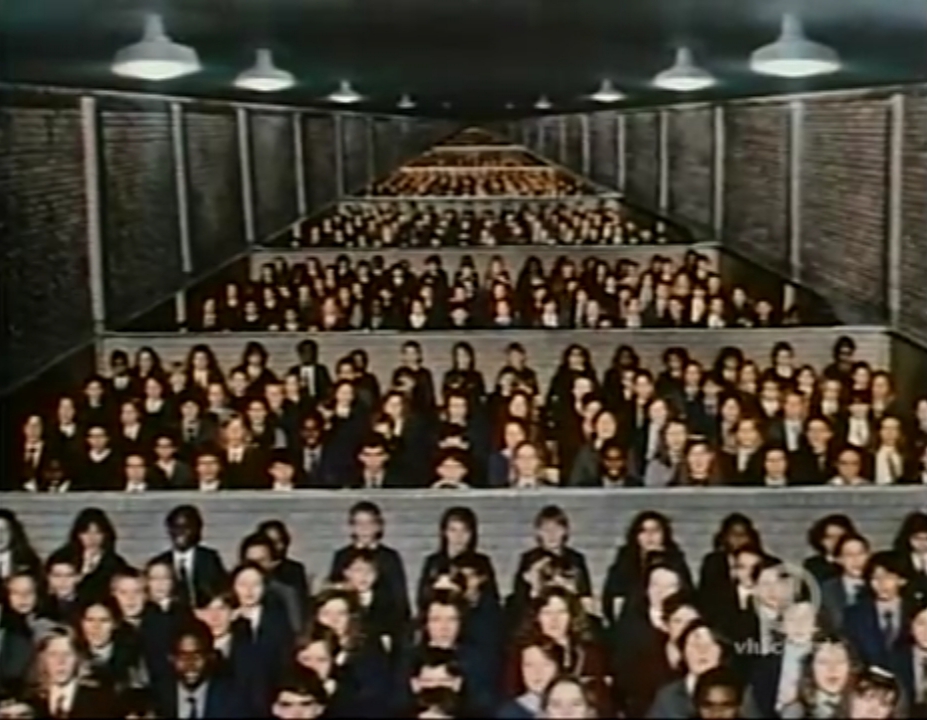
The problem is that this narrative ignores the genealogy of mass education itself. As we now know, the first major mass educational systems were not designed to emancipate citizens, but to discipline populations. Absolutist Prussia led the process in Europe; in Latin America, oligarchies expanded schooling long before any effective democratization. When democracy arrived, children were already in schools, indoctrinated to obey the regime and maintain social cohesion.
This forces us to recognize something uncomfortable: education has always been politically functional. The question was never whether it shapes political behavior, but rather in whose service and to what end.
Education is not a binary variable
One of the most persistent errors in public debate is treating education as a binary variable: it either exists or it does not. In practice, its effects depend on very specific contingencies, and ignoring them leads to mistaken diagnoses.
The first of these contingencies concerns pedagogy and curriculum. Here, the work of Paulo Freire remains central, despite being so persecuted and stigmatized in the Brazilian national context. So-called “banking” education—which deposits ready-made content into students’ minds and naturalizes hierarchies—tends to reproduce relations of domination. Emancipatory approaches, based on dialogue and conscientization, by contrast, encourage the questioning of authority and political participation.
History illustrates this point well. In the nineteenth century, when China’s Qing dynasty sent students abroad to learn military and administrative techniques, it ended up exposing young Chinese to profoundly transformative political and social ideas. The goal was to strengthen the regime; the effect was the opposite. Curriculum and method mattered more than the state’s initial intention, and China was engulfed by a period of deeply transformative revolutions.
Contemporary evidence also reinforces this intuition: minimal civic education interventions lasting only a few minutes, when well designed, produce measurable effects in the rejection of authoritarianism. It is not the quantity of schooling that matters, but what is taught, how it is taught, and with what normative horizon.
Unequal access, fractured citizenship
The second contingency is access and quality. Education can function as a mechanism of control even without explicit indoctrination, simply when it is distributed unequally. By offering high-quality education to elites and poor education to the rest of the population, regimes reinforce social hierarchies and generate political disengagement.
In Brazil, this logic helps explain historical phenomena such as coronelismo. Where the state fails to guarantee inclusive education, individuals cease to perceive themselves as citizens and instead become dependent on local patronage networks. Politics becomes personalized, loyalty shifts from the regime to the intermediary, and regional forms of authoritarianism thrive on the margins of formal democracy.
Ensuring equitable access to quality education, therefore, is not merely social policy. It is structural democratic policy: it reduces personal dependencies, weakens clientelism, and strengthens identification with a broader political community.
Authoritarian legacies and the limits of education
The third contingency speaks directly to the argument developed in “A Cursed Inheritance”: the past does not pass. Even after democratic transitions, institutional decisions and patterns of socialization inherited from authoritarianism continue to shape behavior and expectations.
As Paul Pierson argues, institutions carry path dependencies. Curricula, administrative practices, and school cultures created under authoritarian regimes impose high costs on later change. At the same time, as shown by the work of Anja Neundorf, individuals socialized under authoritarianism tend to internalize norms and beliefs that limit the impact of later democratic experiences.
Hence the importance of thinking about education not merely as a sectoral policy, but as a comprehensive social project involving families, communities, media, and institutions.
When education is not enough, but still matters
The evidence discussed in the column on the electorate imposes a clear limit: education does not eliminate conscious anti-democratic choices. Many voters know what democracy is and still choose policies that corrode it. This does not invalidate education as a democratic instrument, but it redefines its role.
Democratizing education is not merely descriptive. It must teach how to identify disinformation, understand populist projects, and recognize how authoritarian practices affect specific social groups, including those who believe they are benefiting from them. Even so, there will always be those who choose to give up democracy. The crucial difference is quantitative: a well-designed education reduces this segment to a politically insufficient group to sustain autocratization through elections.
Education as arena, not as an automatic antidote
The conclusion is less comforting than we might like, but more honest. Education is not an automatic antidote to authoritarianism. It is an arena of political struggle. It can serve indoctrination or emancipation, the reproduction of hierarchies or inclusion, apathy or participation.
Its democratizing potential depends on institutional design, curriculum, access, quality, and on democracy’s ability to offer material and symbolic experiences that make its values credible. Education remains one of the most promising tools for strengthening democracy—provided we abandon the illusion of neutrality.
Ignoring this is to repeat a recurring error of democracies: trusting that instruments, by themselves, will solve problems that are, at their core, about power, conflict, and choice.
References
Algan, Yann, Pierre Cahuc, and Andrei Shleifer. 2013. “Teaching Practices and Social Capital”. American Econ. J.:Appl. Econ. 5 (3): 189-210.
Bueno de Mesquita, Bruce, Alastair Smith, Randolph M. Siverson, and James D. Morrow. 2003. The Logic of Political Survival. Cambridge, MA: MIT Press.
Cantoni, Davide, Yuyu Chen, David Y. Yang, Noam Yuchtman, and Y. Jane Zhang. 2017. “Curriculum and Ideology.” Journal of Political Economy. 125 (2): 338–392.
Chapman, Hannah S., Margaret C. Hanson, Valery Dzutsati, and Paul DeBell. 2024. “Under the Veil of Democracy: What Do People Mean When They Say They Support Democracy?”. Perspectives on Politics. 22 (1): 97–115.
Checkel, Jeffrey T. 2005. “International Institutions and Socialization in Europe: Introduction and Framework.” International Organization 59 (4): 801–26.
Ferreira, E. 2025. “The Far-Right Tells a Story People Buy — So Why Don’t Progressives?” EUobserver, October 17.
Freire, Paulo. 1970. Pedagogia do oprimido. Rio de Janeiro: Paz e Terra.
Freire, Paulo. 1998. Pedagogia da liberdade: Ética, democracia e cidadania. São Paulo: Paz e Terra.
Huntington, Samuel P. 1991. “Democracy’s Third Wave.” Journal of Democracy 2 (2): 12–34.
Leal, Victor Nunes. 1949. Coronelismo, enxada e voto: o município e o regime representativo no Brasil. Rio de Janeiro: Forense.
Lipset, Seymour M. 1959. “Some Social Requisites of Democracy: Economic Development and Political Legitimacy.” The American Political Science Review. 53 (1): 69–105.
Lieberthal, Kenneth. 2004. Governing China: From Revolution through Reform. 2nd ed. New York: W. W. Norton & Company.
Molinero Junior, G. (2026, 31 Janeiro). Uma herança maldita. DPolitik.
Molinero Junior, G. (2025, 8 Dezembro). O que fazer quando votam contra o seu direito de votar. DPolitik.
Molinero Junior, G. (2025, 28 Novembro). Que a resistência lhe traga liberdade, ainda que não lhe traga paz. DPolitik.
Neundorf, Anja, Natasha Ezrow, Johannes Gerschewski, Roman-Gabriel Olar, and Rosalind Shorrocks. 2017. “The Legacy of Authoritarian Regimes on Democratic Citizenship: A Global Analysis of Authoritarian Indoctrination and Repression.” Working Paper, University of Nottingham.
Neundorf, Anja, Johannes Gerschewski, and Roya G. Olar. 2020. “How Do Inclusionary and Exclusionary Autocracies Affect Ordinary People?” Comparative Political Studies 53(12): 1890-1925.
Neundorf, Anja, Steven Finkel, Aykut Öztürk, and Ericka Rascón Ramírez. 2025. Promoting Democracy Online: Evidence from a Cross‑National Experiment. OSF Preprints.
Paglayan, Agustina S. 2022. “Education or Indoctrination? The Violent Origins of Public School Systems in an Era of State‑Building.” American Political Science Review 116 (4): 1242–57.
Pierson, Paul. 2000. “Increasing Returns, Path Dependence, and the Study of Politics.” American Political Science Review. 94 (2): 251–267.
Radulović, M. 2022. “Discourse of Loyalty, Subjecthood and Citizenship: From Medieval to Modern Practices.” Vestnik of Saint Petersburg University. History 67 (3): 930–944.
Scott, James C. 1972. “Patron-Client Politics and Political Change in Southeast Asia.” American Political Science Review 66 (1): 91–113.
Svolik, Milan, Elena Avramovska, Jana Lutz, and Filip Milacic. 2023. “In Europe, Democracy Erodes from the Right.” Journal of Democracy 34 (1): 5–20.
Wunsch, Natasha, Marc S. Jacob, and Laurenz Derksen. 2025. “The Demand Side of Democratic Backsliding: How Divergent Understandings of Democracy Shape Political Choice.” British Journal of Political Science 55 (39): 1-22.