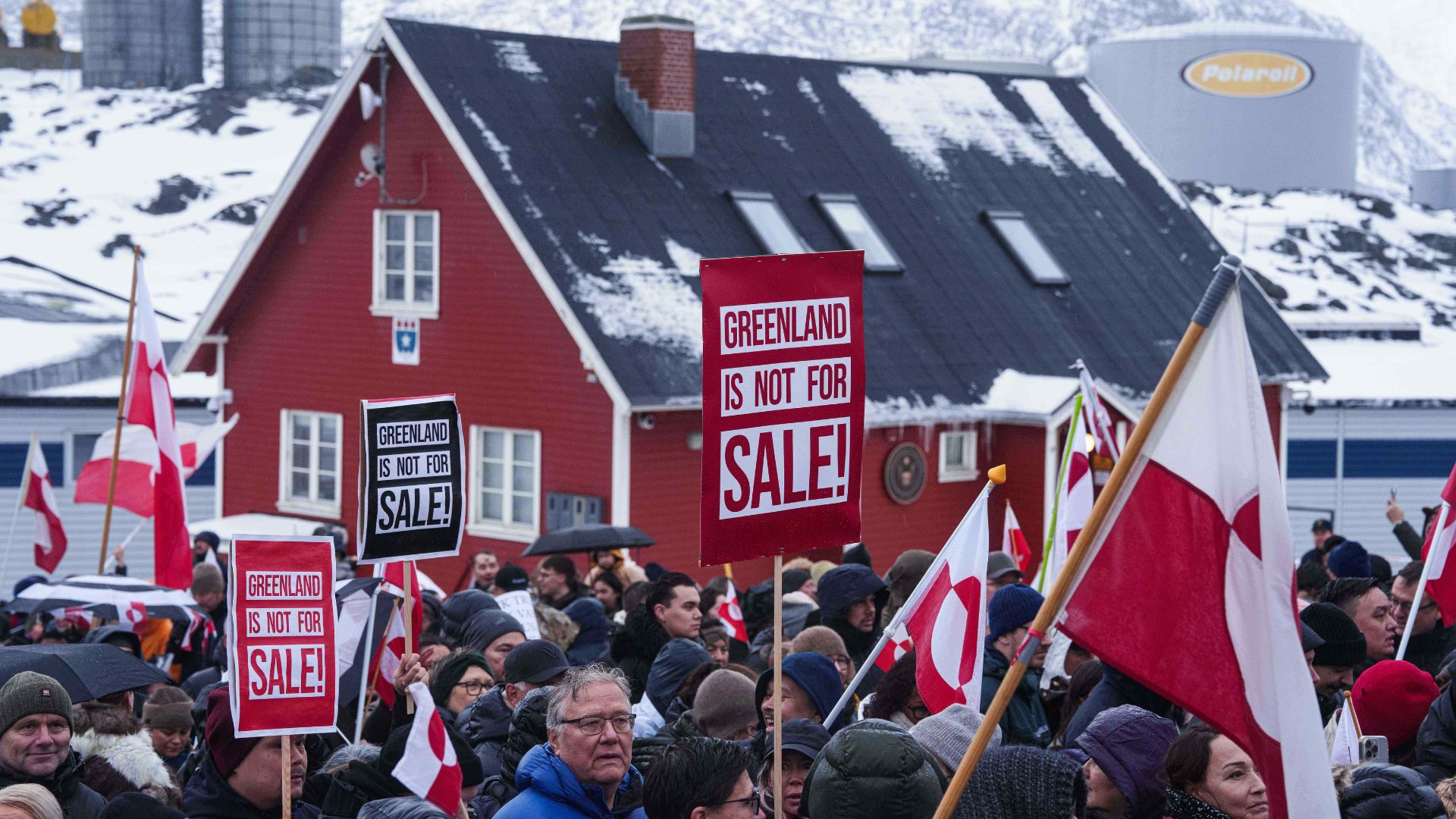
“It is the plague of our times that the blind are led by the mad.” The line from the fourth act of King Lear appears strangely contemporary in light of the most recent episode of a latent political crisis that threatens to sink transatlantic relations for no apparent reason. Within the span of a single month, statements by Donald Trump and figures within his inner circle dragged the United States and its allies in the North Atlantic Treaty Organization (NATO) into one of the worst moments in their relationship since the Suez Crisis of 1956, even generating commentary about a possible realignment of the prevailing international order. As of the writing of this text, on January 27, all this movement appears to be accompanied by an apparent de-escalation in rhetoric on the part of the White House. In this sense, it is necessary to understand several issues surrounding this crisis: why it began, how exactly it began, and the reactions of the countries involved.
Donald Trump’s Obsession with Greenland
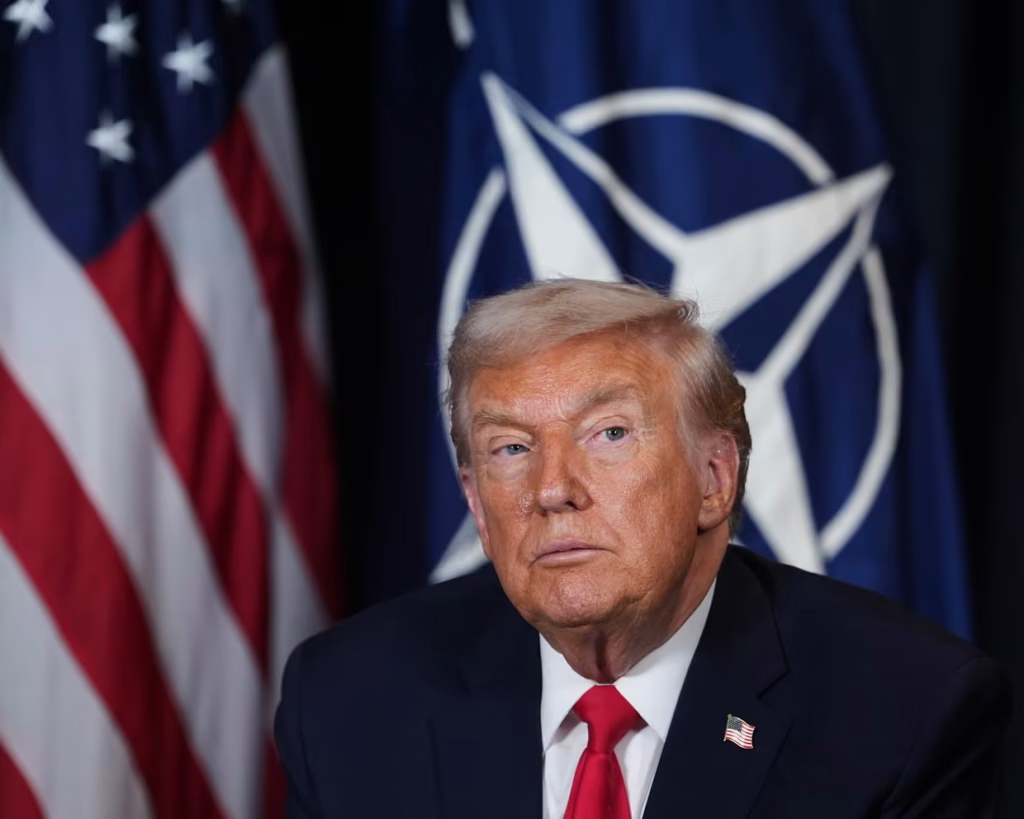
This story begins with a meeting in 2017 between Donald Trump and cosmetics fortune heir Ron Lauder. On that occasion, Lauder reportedly proposed to Trump the idea of acquiring Greenland, even offering himself as an intermediary for any negotiations. Trump, given his background in the real estate business, quickly became obsessed with the idea, viewing it as a monumental deal that could secure him a unique place in U.S. history. At the time, officials from the National Security Council, including the Director for European and Russian Affairs Fiona Hill, were tasked with studying and researching the proposal. Although the idea intrigued some figures within Trump’s cabinet, such as his advisor John Bolton—due to the supposed geostrategic benefits of acquiring the territory to reinforce the U.S. position in the Arctic—the vast majority considered the idea of buying Greenland unfeasible.
In interviews with The New York Times, members of Trump’s cabinet reported both their apprehension and schemes devised by Trump himself to acquire the territory. Among them, particular attention should be paid to the proposal to swap Greenland for the U.S. territory of Puerto Rico with Denmark. Still in 2019, these discussions generated the first of several diplomatic incidents when the contents of the meetings were publicized by The Wall Street Journal. Trump canceled a visit to Denmark after the Danish prime minister publicly rejected the idea of any sale of the territory. Although the idea was formally abandoned, the Trump administration maintained an interest in the island, reopening a U.S. consulate in Nuuk and expressing interest in “strategic cooperation in the Arctic with allies.”
With Trump’s reelection in 2024, he returned to his ideation around a territorial acquisition that could “make the United States great.” In early 2025, Donald Trump once again expressed interest in Greenland, intensifying his rhetoric and questioning Danish jurisdiction while threatening the use of tariffs and even military force against the country. These comments once again generated a diplomatic incident, with European leaders issuing statements condemning the idea of annexation, while Danish leaders announced plans to strengthen their military presence in the Arctic. These measures included renewing the island’s military infrastructure and patrol capabilities in the region, involving ships, drones, and aircraft.
This saga continued throughout 2025 with a gradual increase in tensions. U.S. lawmakers proposed legislation aimed at facilitating the island’s annexation. Figures such as U.S. Vice President J.D. Vance and Eric Trump visited Greenland, reinforcing interest in a territorial acquisition. There were even cases of U.S. espionage on the territory, with three Americans accused by Danish intelligence services of fomenting separatism in the region. In response, Denmark announced a military exercise in Greenland called “Arctic Light,” in partnership with Germany, France, Norway, and Sweden, mobilizing around 550 troops and doubling planned investments in Arctic defense. In December 2025, these actions culminated in the arrival of Jeff Landry in Greenland as a U.S. special envoy, whose mission was explicitly to negotiate the acquisition of the island—an event that can be seen as a point of escalation in the crisis.
Greenland Is (Not That) Important
Before any discussion of the current crisis and its consequences for the international order, it is important to reaffirm a crucial fact. Although Greenland is an element of U.S. interests in the Arctic, the current interest in acquiring it is almost entirely the product of a personal obsession of the current U.S. president. Much has been written about U.S. strategic interests in the Arctic Circle that would supposedly motivate the acquisition of Greenland. However, the reality is far less exciting. Some figures within the administration have attempted to justify yet another act of American cretinism on the international stage. These include vast mineral reserves, the territory’s importance to U.S. defense planning, and alleged competition with other powers. However, it must be emphasized that these arguments emerge essentially post factum to Donald Trump’s interest in the territory.
The island, with around 60,000 inhabitants and an autonomous Danish status, does indeed possess strategic relevance due to its position in the Arctic Circle, enabling the tracking of Russian submarines and missile launches, thereby facilitating the defense of the North Atlantic. The United States has been aware of this since the end of World War II. In 1951, the U.S. negotiated an agreement with Denmark authorizing an American military presence on the territory. Today, that force is significantly reduced from its Cold War peak, with the U.S. maintaining a radar and communications station in Pituffik staffed by around 150 personnel. Still, the 1951 agreement allows for an expansion of the military presence, provided Copenhagen is notified in advance. This clause helps explain European perplexity at the attempted acquisition: Washington already has the right to expand its operations, and Denmark has never opposed requests to that effect.
Moreover, there is a caveat: what is the threat that supposedly justifies the acquisition? The primary threat to U.S. interests in the Arctic, Russia, has indeed spent years investing in and consolidating a military presence in the far north. It then chose to send those troops into a meat grinder in eastern Ukraine. The resulting need to rebuild the Russian military and salvage the economy has delayed Moscow’s Arctic ambitions for years, to say the least. Russia’s weakened position consequently opened the door for China to leverage its investment in the Russian war machine to push for greater access to the Arctic through increased investments and joint maritime security agreements. However, Beijing is far from any significant military or economic presence in the region. Previous attempts at direct investment in Greenland failed due to resistance from the Danish government. To date, there are no successful Chinese projects on the island. Once again, the threat to U.S. interests that would justify an acquisition simply does not exist.
Another recurring argument involves Greenland’s mineral resources. U.S. officials frequently highlight so-called rare earth elements, considered essential to technological competition in the 21st century and whose production is predominantly controlled by Beijing. There are indeed significant mineral reserves in the territory, with approximately 1.5 million tons of rare earth minerals, placing it among the world’s top ten holders—though far behind countries such as China, Brazil, India, Vietnam, and the United States itself. Even so, exploiting these resources faces considerable obstacles. Extraction would take place in regions with extreme temperatures, which can reach −40°C, and would require billions of dollars in infrastructure investment. By comparison, projects in more temperate climates are significantly cheaper and more profitable, a reality reinforced by declining mineral prices. For this reason, the economic viability of mining in Greenland is limited.
Additionally, it is worth emphasizing that the term “rare earths” is somewhat misleading. The minerals themselves are not scarce; on the contrary, they are relatively abundant. The problem is that they are rarely found in concentrations worth exploiting. Even when concentrations are high, the process of extracting the elements from the ore is expensive and highly polluting. This is why China dominates the market. In addition to having more reserves than any other country, the Asian giant currently controls the vast majority, around 90%, of the mineral refining process. Therefore, even if all the challenges associated with mining in Greenland were overcome, the likelihood that the minerals crucial to “strategic competition” would end up in Chinese refineries remains high. The United States simply does not possess a significant refining industry.
The White House Lost Its Marbles
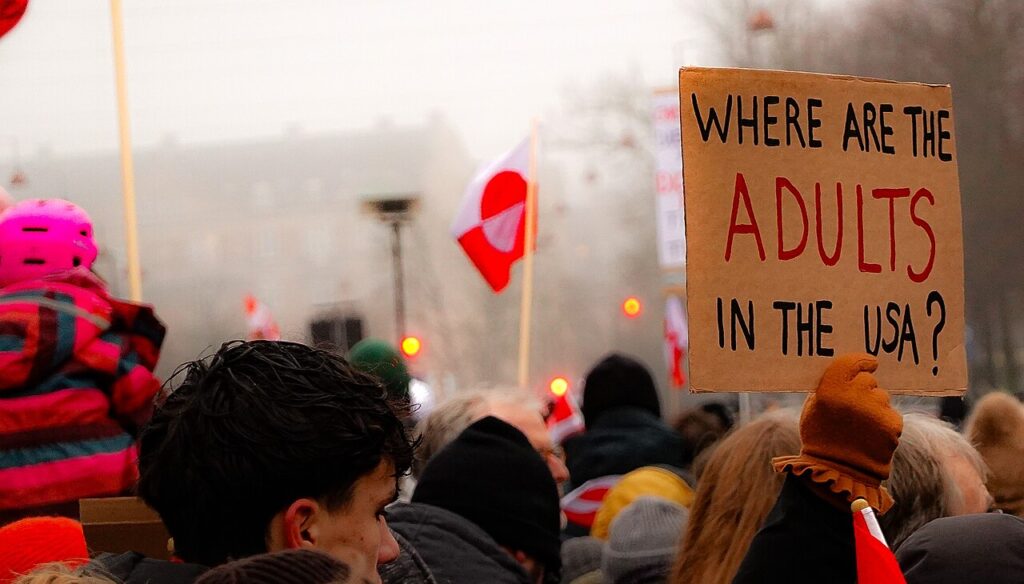
That said, and understanding where this crisis originated and the degree of cretinism involved, what happened in the past month to create one of the worst crises in the history of transatlantic relations? Essentially, after Jeff Landry was appointed U.S. special envoy, the American government drastically escalated its rhetoric surrounding Greenland. Figures such as Stephen Miller, Scott Bessent, Marco Rubio, and Donald Trump himself began publicly discussing the need to acquire the territory. On multiple occasions, they spoke openly about the supposed “right” of the United States to control the territory. Partly encouraged by the U.S. intervention in Venezuela earlier this year, these figures engaged in an extensive campaign seeking to justify a possible annexation. On several occasions, it was even stated that “perhaps it is a choice between NATO and Greenland.”
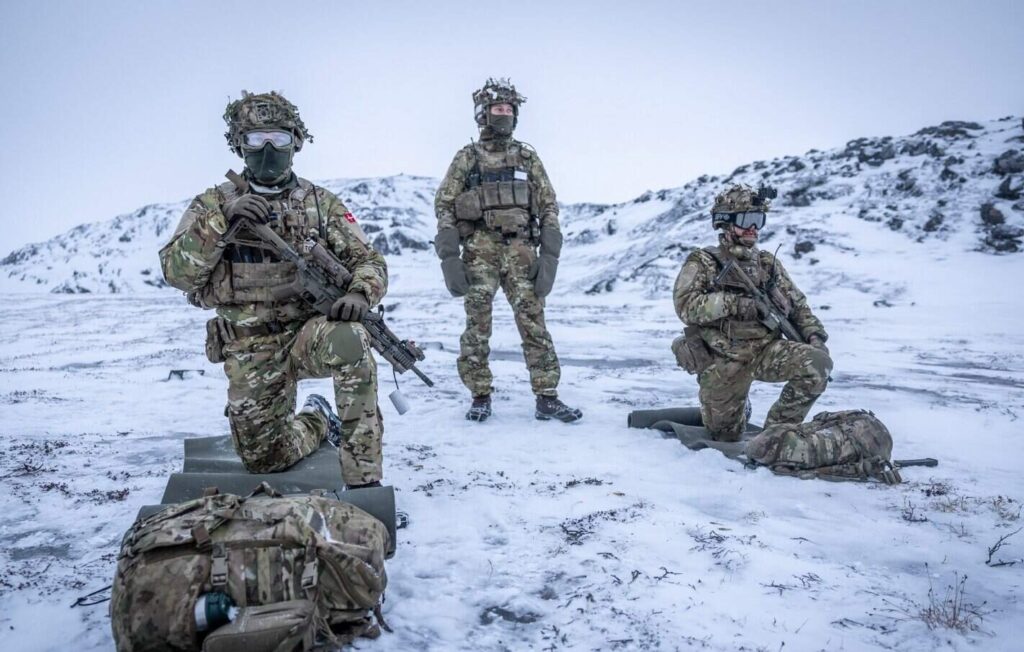
This scenario worsened on January 15, when several European capitals announced the start of the “Arctic Perseverance” military exercise. Small military detachments were sent to Greenland in conjunction with Denmark. These teams consisted of approximately 40 personnel from countries such as France, Germany, the Netherlands, Finland, and Sweden. The objective was to visit the territory, begin planning for the later deployment of larger forces, and signal support for Copenhagen. This small European military presence on the island provoked a disproportionate reaction in Washington, D.C., with Trump threatening all involved countries with tariffs. He also announced that if Denmark did not agree to the acquisition by early June, the country would face broader economic retaliation.
This exchange led to one of the most peculiar incidents of the entire crisis. On January 19, Donald Trump sent a message to Norwegian Prime Minister Jonas Gahr Støre. In the text, Trump reiterated his demand for “total and complete control of Greenland” and attributed his own behavior to not having received the 2025 Nobel Peace Prize, writing that he no longer felt an “obligation to think exclusively about peace.” The message was met with perplexity in European capitals. The Nobel Committee is independent, and the Norwegian government has no control over who receives the prize. Moreover, the prize is awarded for the laureates’ work in the previous year, and Trump did not even hold the presidency in 2024.
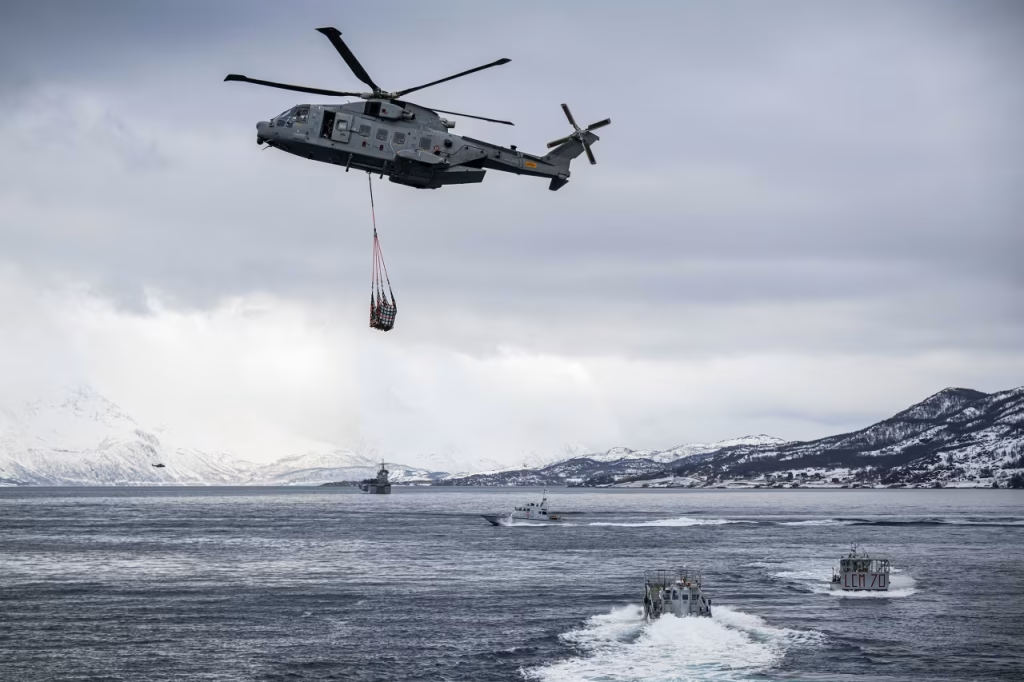
While the White House reacted erratically to the Nobel Prize issue, Denmark intensified its military response. Within the framework of the previously announced exercise, the Danish government declared that around 1,000 troops would be sent to Greenland. The reinforcement would include frigates and fighter jets and would be implemented gradually over the following weeks in coordination with European partners. The objective was clear: to deter any hostile military action against the territory. Discreetly, Danish troops received live ammunition and orders to respond to any attempt to invade the island. The instructions unequivocally included the possibility of confrontation with U.S. forces. On the economic front, the European Parliament suspended approval of a proposed EU–U.S. trade agreement on January 21. In parallel, retaliatory tariffs against the United States were prepared.
However, still on January 21, during the meetings of the World Economic Forum in Davos, the crisis appeared to lose momentum abruptly. While European leaders spoke about the emergence of a new international order, Donald Trump issued veiled threats toward Brussels, stating that the United States would “remember the European reaction.” Nevertheless, on that same day, Trump announced that he and NATO Secretary-General Mark Rutte had reached the “framework of a future agreement” regarding Greenland. The announcement included the withdrawal of the threat of retaliatory tariffs against European countries, marking an unexpected inflection in the escalation of the crisis. At the time of writing, there is no clarity as to what exactly the agreement would include. Trump claimed to have extracted significant concessions regarding the construction of military bases and mining rights, but did not specify what these concessions were or how they would be implemented. The Danish government itself reacted with some confusion to the supposed agreement, with figures within it stating that it amounted to nothing more than a conversation between two individuals. Frankly, there are more questions than answers surrounding the alleged agreement.
We Almost Destroyed the Transatlantic Relationship: Now What?
What now? After one of the worst moments in transatlantic relations, this question does not appear to have a clear answer. The sudden escalation of the crisis followed by an equally abrupt de-escalation left capitals on both sides of the Atlantic directionless. In addition to reinforcing that the United States has been an inconsistent ally in recent years, the crisis opened the possibility that the U.S. could become an unprecedented threat to NATO. By all accounts, Denmark was a staunch U.S. ally, willing to accept a greater American military presence in the Arctic, pushing away any Chinese or Russian attempts to establish themselves in the region—and in return for what? Sanctions, threats, and insults because of an obsession of the orange marshmallow occupying the White House.
The direction that other U.S. allies appear interested in pursuing after this crisis can be observed in the speech of Canadian Prime Minister Mark Carney at the World Economic Forum in Davos. In his speech, he acknowledged the contradictions of the liberal international order and proclaimed its exhaustion. According to him, the world is entering an era marked by competition among great powers. In this context, Canada, as a middle power, should adapt its behavior to this new reality. Carney emphasized the need to develop a form of strategic autonomy based on the diversification of partners and foreign policy options, with the goal of reducing dependencies and vulnerabilities. This approach would culminate in what he termed “values-based realism.” This message resonated with European leaders, who appear to be gradually moving toward a similar vision, reassessing the transatlantic relationship and their partnerships.
In the United States, however, no similar movement occurred. Most American “intellectuals” showed no willingness for critical reflection. On the contrary, various sectors of the media and think tanks in Washington, D.C., began publishing editorials highlighting the supposed “strategic benefits” of a potential acquisition of Greenland. Donald Trump himself barely remembers the crisis he initiated. He is currently preoccupied with pressuring the South Korean government for “delaying” the ratification of a trade agreement with the United States. The phrase that opened this text seems to summarize the situation disturbingly well: an international crisis that occupied multiple capitals and diplomatic apparatuses for a month—for nothing. Madness.
What could have been dismissed as a diplomatic incident escalated into a scenario in which traditional U.S. allies found themselves compelled to calculate real economic and security rupture risks, driven by actions seemingly disconnected from contemporary geopolitical logic. The rhetorical aggressiveness directed at NATO partners, followed by an attempt to return to normalcy without concrete resolutions, suggests an erosion of the mutual trust that had until then underpinned the prevailing liberal international order. As observed in the Canadian prime minister’s statements in Davos, these events are not isolated but symptomatic of a structural weakening of the norms governing the international system since the post–World War II era. U.S. foreign policy, in this context, appears to be surrendering to personalistic impulses at the expense of institutional stability. It follows, therefore, that the absence of traditional strategic rationality does not reduce the risk environment—on the contrary, unpredictability is beginning to become a new norm. To conclude the analysis of the anarchic and, at times, absurd nature of contemporary power relations, one may turn to Thucydides’ timeless observation in The History of the Peloponnesian War: “The strong do what they can, and the weak suffer what they must.” The phrase refers to the episode of Melos, when Athens, supported by its military superiority in the Aegean, imposed its will through force. Yet such unchecked power did not guarantee final victory. After years of erratic military adventures and the progressive alienation of its allies, Athens saw its strategic position deteriorate. Sparta, its rival, in turn, managed to assemble a coalition capable of inflicting a decisive military defeat. If Athens fell by confusing power with impunity, it remains to be seen how long the United States will withstand the same illusion.